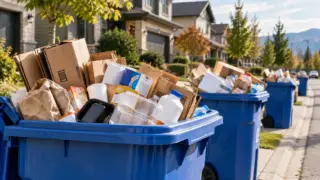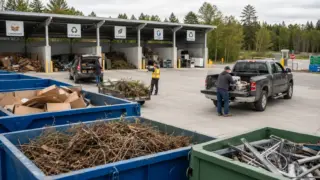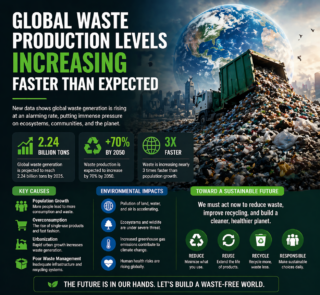


 Even if you haven’t built anything since you were a child playing with a Lego set you’ll still be able to appreciate that there’s an awful lot that goes into putting up a building. Plus the fact that the bigger they are the more construction waste that is created. Plastic waste is going to be a part of that too, and as is always the case with plastic it’s not broken down very easily if at all and it tends to be very problematic if it’s not channeled properly with waste management. And the issue with a lot of large-scale job sites is the sheer volume of all types of waste that are created.
Fortunately most developers are entirely compliant with the regulations for proper waste disposal, and this is something that’s immediately connected to what we do as a dumpster rental provider for Trenton and Colborne here in Ontario. We also adhere to all Provincial regulations for handling of waste materials, but of course we don’t handle the type of volume that’s going to be coming from a major commercial development project in the heart of the city or anything of that sort. Most of the times we are doing disposal bin delivery and pick up for residential job sites and projects like that, and it’s good for customers to know that we are also certified to handle Hazmat materials.
So while we may be a smaller fish in the pond, we’re in the same industry and that’s why this recent news about changes at the Federal level aimed to promote more thorough collection and recycling of plastic waste for the construction industry across Canada is some that was bound to catch our attention. We’ll provide an overview of this with this month’s blog entry here, and overall it’s definitely a step in the right direction given how much construction is going on across Canada these days – both residential and commercial.
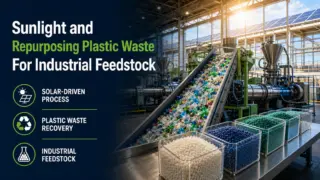
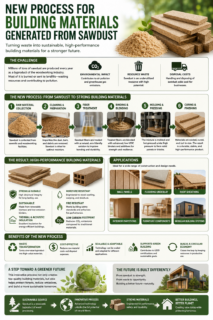
Repurposing for New Building Materials
Just last year (2024) was when the Construction Plastics Initiative (CPI) came out with their Benchmarking Study that led to this new regulation, and it is noteworthy because it’s the first national effort to evaluate plastics in Canadian construction projects at scale. It showed how construction plastics remain under-tracked and under-managed, and from it the wheels were set in motion for legislative changes tto close these gaps through stronger reporting, supplier engagement, and onsite practices.
Construction plastics are actually a far more significant source of plastic waste than single-use plastics, and again it’s just because of the sheer volume of them that are produced at these job sites. Global negotiations for a plastics treaty have been stalling out, but Canada’s Federal Plastics Registry is set to expand for 2026 to include construction plastics, requiring companies that supply or use building materials to report how much plastic they produce and recycle. Plus how they are disposing of any waste that can’t be recycled.
The initiative started with 10 construction projects in BC’s Lower Mainland to capture, divert, and repurpose plastic waste and manufacture them into new building materials. Our waste disposal and rubbish removal service for Campbellford and Rice Lake is always available for anyone who needs a dumpster delivered, and we’re a long way from BC. But what was learned from construction projects there will certainly apply to ones in Ontario too and elsewhere in Canada. What this initiative is doing is building the evidence base for national change, along with strengthening ESG performance, meeting investor and regulatory expectations, and advancing a circular economy for construction plastics.
Project & Regional Variances
Key findings from the study include:
- Diversion intensity averaged 1.1–2.7 kg/m², and the highest volumes came from institutional and residential projects.
- For comparison: at 1.1–2.7 kg/m², the amount of plastic diverted from the construction of a building the size of The Hospital for Sick Children in Toronto (260,000 sq m) would work out to as much as 700,000 kg — the equivalent of 140 million plastic bags.
Regional differences were observed between provinces and these differences indicate that supply chains, infrastructure, and policy frameworks are influencing outcomes. The year of project completion also tends to factor in, with a 2015 spike in diversion intensities aligning with national trends in plastic disposal. One of the shortcomings to date is the way that current reporting systems rarely separate plastics by material type, and this impedes benchmark progress or target solutions.
What had been determined in advance of this new benchmark being established is that there are inconsistencies in how construction plastics are tracked and diverted, and outcomes varying widely by project type, region, and reporting practices. With approximately 80% of construction plastics being clean packaging that are readily divertible, the need for us to be better with this was very evident. The research suggested that proven measures such as signage, crew training, and supplier take-back programs, could bring diversion rates upwards of 80%, and hopefully that’s what we see happen.
This work positions Canada’s construction sector to meet new obligations as well as establish a better standard that makes it regular practice for construction plastics to be measured, managed, and transformed into valuable resources.
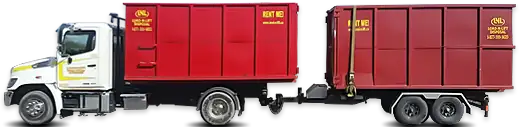
Folks in Trenton, Colborne, or Campbellford that need a dumpster rental should call Load n’ Lift first to get the best product, price, and same-day delivery of a disposal bin to your job site in most instances. We feature roll-off bins that are much better designed for little to no impact on the ground of the site and the unique multi-lift hydraulic hook on our truck reaches out and lifts the bin off onto the chosen site area, and then back onto the truck once you’ve filled it. Ground-level entry for the bins is better too, and you can have a look at our gallery here to see what we’re talking about.
Need a bin? We’ve got them and they’re ready to go at a moment’s notice. Get in touch with us here at Load n’ Lift.
Load-N-Lift Disposal — family-owned bin & dumpster rental across Eastern Ontario since 2007.
Related: our bin rental services · all areas we serve.
Call 877-355-5623 for up-front pricing and same or next-day delivery.