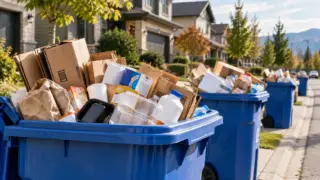


 The existential realities of the fact that there’s above 8 billion people isn’t lost on most of us, and one of the unavoidable ones of those is that many people is going to mean an awful lot of waste is produced. Individual households can do their best to curtail their production of waste, but in the bigger picture there’s no getting around population growth meaning garbage-production growth. We only touch on that at the smallest of scales a dumpster rental provider for Trenton and Colborne, but even we’ve seen more waste than you’d expect from an average job site.
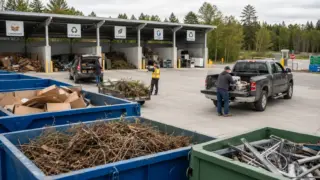
So it’s fairly easy to envision the types of circumstances and challenges faced by global policy makers and the individual representatives from countries that meet to discuss how to best tackle this problem. What we have here is a rubbish removal service for local home and business owners, but for the decision-makers at the big table it’s really more about the management of the stuff rather than just taking it away and getting it to the right Provincial transfer station. When you rent a dumpster in Ameliasburg or Belleville you can be fairly sure that’s where your waste will one directed, and ideally progressively less of it is going into a landfill.
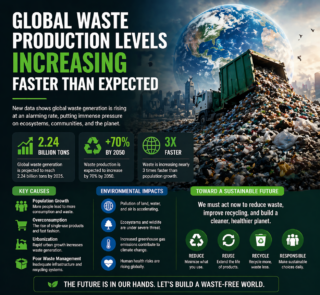
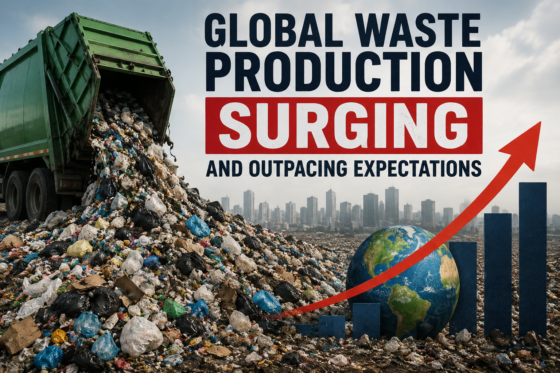
Which is very important based on the context of recent new that global waste production is surging and outpacing the expectations seen for it at the start of the decade. Six years ago the experts didn’t foresee this type of growth with it, but given the ultra-consumerist nature of life in most parts of the world it shouldn’t come as any surprise. The production of waste isn’t something that can be realistically curtailed, but handling and processing waste can be done more smartly and efficiently. That has to be the aim, and fortunately the global community has been doing fairly well with it.
We really do need to keep as much waste out of landfills as possible, and that’s something that’s true for every major metro urban area in any country on earth. Our expertise is always going to only be in roll-off disposal bins for Campbellford and area, but we are in the same stream enough to be able to see and admire what others are doing to take an overarching approach to better waste management so that increasing volumes can be handled,So with this month’s entry we will take a deeper look at this finding and share what is being done to handle the problem of the world’s ever-growing trash problem.
5 Years Early
All of this is framed around the finding of a new World Bank report that indicates global waste generation is rising faster than previously projected. It was in 2018 when an estimate that the world would generate 2.59 billion tonnes of waste by 2030 was shared, but apparently we’d already slightly exceeded that by the end of last year (2025) – so half a decade earlier than expected..
The report found that global waste generation is expected to grow to 3.86 billion tonnes by 2050, and that’s an approximately 50%-increase from what was foreseen 8 years ao. The increase in low-income countries is expected to more than double by 2050, and the fastest growth predicated to come from Sub-Saharan Africa and in South Asian countries.
As we’d expect it is the richer 1st-world countries producing the most waste. The distribution of waste generation is uneven across country income groups and regions. First-world countries comprise 16% of the global population but produce nearly 30% of the world’s total waste and had the highest per capita waste generation. The 36% of the global population that qualify as upper-middle-income country citizens produce the largest share of global waste – 42%.
That goes along with the 40% of lower middle-income country residents making up around 40% of the population and producing a quarter of all global waste. Low-income countries only have 9% of the population and are responsible for just 4% of the waste. East Asia and the Pacific generated the largest share of global waste (33%) while the Middle East and North Africa produced the least – 6%.
Waste Type
The majority of municipal waste collectively around the world is food and garden waste, and this number is higher for low-income countries. Higher-income countries are different. They have waste streams dominated by dry recyclable materials, textiles, and waste electrical and electronic equipment (WEEE), which together make up near half of their processed municipal waste each year.
What’s more noteworthy about this from a whole-earth perspective is the collection rates for waste. The reports has shown there are dramatic disparities across income levels and regions. In high and upper-middle income countries collection rates tend to be fairly good and consistent, with high-income regions such as North America reporting rates close to 100% and 88% for upper-middle income countries.
That’s compared to just 61% for lower-middle-income countries 28% for the lowest income countries. South Asia and Sub-Saharan Africa having the lowest collection rates worldwide at 67 and 31%, and it’s in the locations where governing bodies need to come together and come up with a workable plan for these countries to do better with waste management. Understanding the challenges they have and will have difficulty overcoming.
Possible Scenarios
The report concluded that there are 3 alternative scenarios for municipal solid waste management that are feasible moving to 2050. They show different policy choices and levels of ambition could shape the future of global waste. They are:
- Business as usual
- Low ambition
- High ambition
For business-as-usual – prevailing trends continue, and there is a significant increase in global waste generation – an estimated 3.86 billion tonnes produced around the world each year by 2050.
For high-ambition – future waste generation is capped at prevailing levels, and independent of the influence of ongoing population and economic growth. This is made possible with a combination of targeted interventions and improved waste management practices.
For low-ambition – this will be the appealing middle path, and the goal will be to achieve heal the reduction of the high-ambition scenario, with global waste limited to 3.12 billion tonnes across the globe each year by year 2050.
The low and high-ambition scenarios are in line with a reduction in global GHG emissions from the waste sector between 2030 and 2050, with estimates of 1.33 billion tonnes of carbon dioxide equivalent and 0.91 billion tonnes of carbon dioxide being eliminated. There’s everything to like about that, and ideally this is what the experts and decision-makers will aim for as it’s more doable. Directing a modest share of GDP into well managed, essential systems can lock in basic service reliability and disconnect waste management from economic losses. And of course reducing pollution and the production of greenhouse gases.
Need to rent a dumpster in Colborne or Trenton for your job site? Or anywhere else not far East of Peterborough? Get it right from the start with a call to Load n’ Lift. We can deliver a roll-off mini bin that is easily loadable from ground level and then collect again once full. Then we take all waste to the proper Provincial facility and dispose of it in the proper way. Taking the stuff off your hands and leaving you with a cleaner site after the job’s done is what it’s all about for a service provider like us, and we’re happy to have every customer and make every disposal bin delivery.
Load-N-Lift Disposal — family-owned bin & dumpster rental across Eastern Ontario since 2007.
Related: our bin rental services · all areas we serve.
Call 877-355-5623 for up-front pricing and same or next-day delivery.