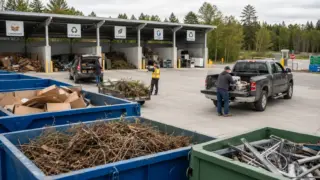


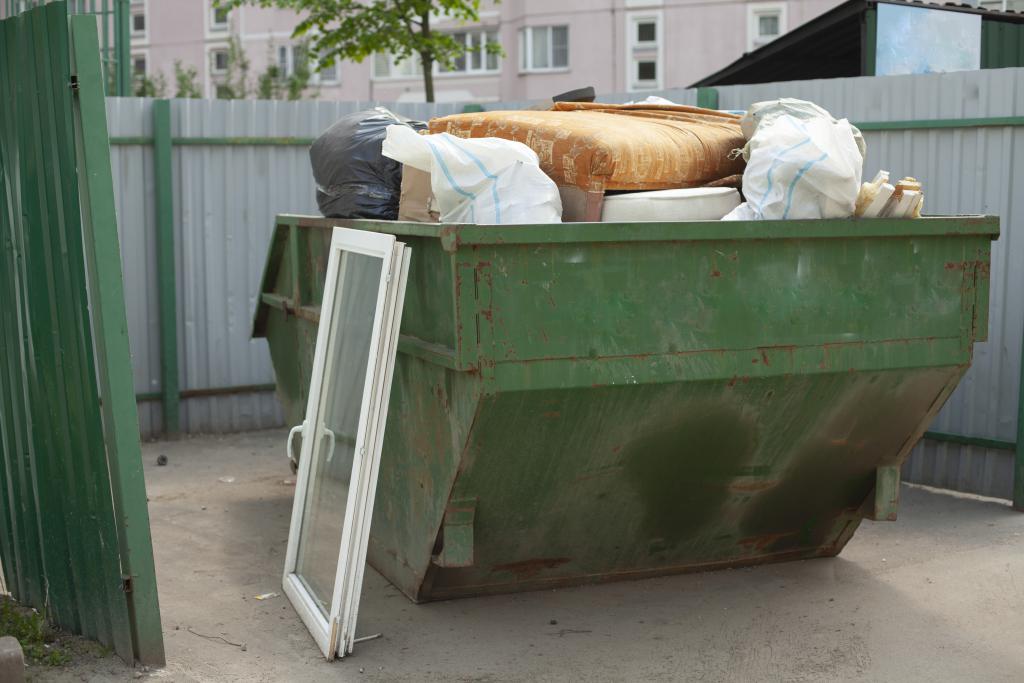
An unfortunate but unavoidable reality of the modern lives people live is increased production of domestic waste. This can be managed at the individual household level somewhat effectively, but at the civic level it’s a real challenge for municipalities. Then there’s the amount of waste produced by home renovations and demolitions and the like that have more sheer volume to them than any single household could produce in a year or two.
As waste pickup and hauling providers in Trenton and Colborne areas of Ontario we are the ones who see the massive size of these hauls on site and then also see what they add to once they get to the dump or municipal works yard.
For a good 20+ years now municipalities have been doing fairly well with handling waste management on the macro scale, and in reality the area that needs the most improvement is with individuals and the buildings they’re either inhabiting or working in. If you need a Southern Ontario dumpster rental you’ll call us, but if you need to find smart and insightful ways to help folks manage their waste production then you’ll need experts who are way brighter than us in that regard.
They certainly exist, and in fact many of the best of these waste management professionals are here in Ontario. Architects and designers are effectively designing buildings for proper waste management. The design then influences the operational efficiency of the waste collection program, what it costs to service the program and the diversion rate.
Workplace Waste Production is Huge
The consensus with buildings is that waste issues stem from fit-ups and the base building design doesn’t factor in as much. Check out this statistic – it’s estimated that 70% of all garbage in Ontario is generated at work, and the blue box program only grabs about slightly more than half (51%) of all recyclable cans, glass and plastic bottles for both homes and workplaces. This then has to be paired with the fact that since 1978 about 75% of North America’s landfill sites have filled to capacity and then shut down because there’s no more room to fill them. This is true here too.
For more than 25 years the province has been stuck at a 25% diversion overall from residential and commercial waste generators – meaning what’s kept out of the landfill.
Consider as well that 30% of all waste in municipal landfills comes from packaging. Let’s look at the 1.5 billion coffee cups purchased every year that come with a polyethylene liner. The liner makes them a contaminant to the paper industry, so municipalities and private companies that own and manage buildings are absorbing the majority of the cost connected to collection and disposal of these lined paper cups.
Or how about the 140K tons of e-waste that ends up landfills every year. All of this adds up to a scenario that really can’t continue in the way it currently is.
Better Waste Management Goals
Goals for working more waste management value into building design include operational efficiency to meet the needs of the building, cost effectiveness, and safety to minimize risk and cleanliness. It’s going to be important to be flexible too as a way to adapt to inevitable future changes. Ideally we need to see stewardship programs and evolving stakeholder preferences.
Moving Garbage through a Building
It is standard to have a contracted cleaning company collecting garbage inside a building. Janitorial companies do the physical work of that but they are not adequately trained on the expectations of programs and goals and what kind of choices and methodologies will be in line with them.
Space is always the issue, and in particular problems stem from:
- Space lacking on floors
- Circulation corridors not being wide enough
- Turning radius and doorways are often not wide enough or swing correctly
- Fire codes mean recycling bins cannot be stored in corridors
- Cleaners being expected to collect cardboard in elevator lobbies where space is insufficient
Rating systems pushing for energy reduction in buildings adds to the challenge too, because there’s the preference to move to daytime cleaning because of the way more lighting is required at night. But tenants don’t want to see people moving garbage around the office or in the lobby during the workday.
Storing Garbage
Space is also a huge factor in the mismanagement of waste in residential and office garbage rooms. There must be bins for cardboard, roll-out carts or something similar for recyclable paper, mixed containers, electronics, food waste, shredded paper, paper towels, batteries, toners and some space dedicated for items that don’t match what other receptacles are intended for. Storage facilities have to be designed to allow bins to be accessed. Waste and recycling should be separate, but isolated to prevent cross-contamination that may prevent items from being recycled when they otherwise would be.
Plus, remaining contents of a overflowing recycling bins often go in the garbage. Reduced storage capabilities mean more frequent collections and this means added costs and more reluctance to engage in these better waste management practices in Ontario. If they’d need a dumpster bin in Trenton and Colborne we can certainly take care of that, but most homes or businesses wouldn’t consider that for obvious reasons.
Role of Waste Management Vehicles
Front-end bins are most commonly used for garbage collection. Sufficient entrances and exit spaces are required for these type of front-end bin trucks, plus enough space to safely and easily maneuver inside and many times they are forced to access bins on the exterior of the building. Bins must be located at dock or ground level, and it is not often they are emptied inside because 20 -24’ of clearance is needed. Loading docks don’t make much of a difference with buildings designed to maximize the amount of leased space.
What we need is more roll-off compacters as they are the best option for large buildings with the ability to hold a lot of garbage. They are also effective from a cost and environmental perspective, with a compaction ratio of about 4:1. These are the types of vehicles we should hopefully see more of in major metro areas of Ontario.
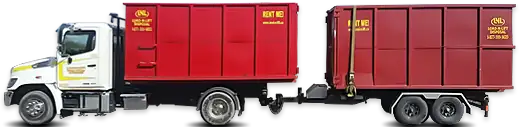
One and all requiring waste pick up and disposal in Colborne or Trenton areas or dumpster delivery and pick up can call us at Load n’ Lift at their convenience. We can have dumpster bins on site and picked up once you’ve filled them up. Add the very best in pricing and service AND we do domestic or industrial site waste disposal right as per Ontario provincial regulations. At your service!
Load-N-Lift Disposal — family-owned bin & dumpster rental across Eastern Ontario since 2007.
Related: our bin rental services · all areas we serve.
Call 877-355-5623 for up-front pricing and same or next-day delivery.